Anyone who has actually hung around around a Magnet journey discovers rapidly that the work is not truly about chasing a plaque or preparing a refined document. It is about proving, in a disciplined way, that nursing quality is constructed into how a company leads, practices, enhances, and determines outcomes. That is why the current structure of the Magnet model matters so much. It provides organizations a practical framework for revealing what outstanding nursing looks like in operation, not just in aspiration.
For leaders looking for Magnet Recognition Program ® classification through the American Nurses Credentialing Center, the structure in place today is clearer and more evidence-driven than the older language lots of veteran nurses still remember. The design now centers on five components: Transformational Leadership, Structural Empowerment, Exemplary Specialist Practice, New Understanding, Innovations, & & Improvements, and Empirical Results. Those five components are not a cosmetic rebrand. They reflect a shift in how quality is organized, evaluated, and defended.
From a Magnet ® Consulting viewpoint, understanding that structure is the difference in between a coherent technique and an aggravating scramble. Teams frequently begin with a broad sense that they are "doing Magnet work." The real development begins when they can map their practices and outcomes to the real present design and understand why each piece belongs where it does.
How the present design pertained to be
The Magnet Recognition Program ® traces its roots to a 1983 study of healthcare facilities that had the ability to draw in and maintain nurses, institutions that happened known informally as "magnet" health centers. That early work shaped the identity of the program and the values connected with it. Over time, the official program progressed, and the name officially changed to Magnet Acknowledgment Program ® in 2002.
The present structure did not appear out of nowhere. ANCC describes that the design developed from the earlier 14 Forces of Magnetism. After a 2007 analytical analysis of appraisal ratings, those forces were regrouped into a five-component conceptual model introduced in 2008. That history matters due to the fact that numerous companies still bring legacy language in their culture, committee charters, and presentation decks. You still hear individuals describe the forces, specifically in medical facilities that have actually been on the Journey to Magnet Quality ® for numerous years.
That is not always an issue. In reality, some long-serving nursing leaders use the old terms as a mentor bridge. The concern comes when a company continues to believe in pieces rather than in the integrated structure ANCC now utilizes. The five components are wider, more strategic, and more tightly aligned with proof requirements. A modern Magnet technique has to show that.
Why the five-component structure works much better in practice
The older forces used uniqueness, which had worth. The newer structure uses something most companies need even more, coherence. Instead of treating excellence as a collection of different traits, the current design asks whether leadership, empowerment, professional practice, development, and results strengthen one another.
That is how nursing quality behaves in real organizations. Strong shared governance with weak results is inadequate. Positive outcomes without visible leadership assistance are difficult to sustain. Development without professional practice requirements can become performative. The model captures those realities.
In Magnet ® Consulting engagements, among the first patterns that emerges is misalignment between what leaders believe they are stressing and what the evidence really shows. A chief nursing officer might feel the company is extremely innovative, for example, however when teams examine their work, they may find that most of the strongest examples truly belong under Structural Empowerment or Excellent Professional Practice. The model helps correct that drift. It requires precision.
Transformational Leadership is more than executive presence
Transformational Leadership sits at the front of the design for great factor. Magnet work needs visible management, however not leadership in the ceremonial sense. It is not about keynote speeches, refined worths statements, or executive rounding that never touches decision-making. In a Magnet context, management needs to form direction, assistance nursing, and hold the company steady through change.
That sounds obvious till a health center enters a challenging season. Spending plan pressure, turnover, a system combination, or the rollout of a new documentation platform can expose whether nursing leaders truly lead transformatively or simply handle tasks. The organizations that hold up best during Magnet preparation are typically the ones where nursing leaders can connect strategic top priorities with practice realities. Staff nurses comprehend where the organization is going, why it matters, and how their work contributes.
From a consulting perspective, this is where lots of stories either gain credibility or lose it. A composed file can describe a vibrant vision, but ANCC's standards are not pleased by rhetoric alone. The question is whether leadership choices, communication patterns, and organizational priorities demonstrate that vision in action. When they do, the component becomes a strong structure for the rest of the application. When they do not, every downstream area feels thin.
Structural Empowerment shows whether the company has actually built the right scaffolding
Structural Empowerment is frequently misinterpreted since the expression sounds abstract. In truth, it is among the most concrete parts of the design. It asks whether the company has produced structures that permit nurses to get involved, establish, affect practice, and connect to the broader neighborhood of the profession.
That consists of internal structures, such as councils or official pathways for nursing voice, and external connections to the profession and community. It is not enough for leaders to state they value staff input. The company has to demonstrate that channels for involvement exist and function.
This is one location where a health center's culture reveals itself rapidly. In some organizations, empowerment is real. Staff nurses can describe how practice concerns move through councils, where choices are made, and what altered as a result. In others, the structure exists on paper however not in lived experience. Meetings happen, minutes are recorded, yet frontline nurses can not indicate significant influence.
Experienced Magnet ® Consulting teams often invest a great deal of time here due to the fact that Structural Empowerment tends to expose the space in between design and usage. A committee charter might look outstanding, but if attendance is irregular, follow-through is weak, or interaction back to staff magnet consulting is poor, the structure is refraining from doing the work the design anticipates. The repair is seldom attractive. It usually involves accountability, cleaner governance, and better interaction loops.
Exemplary Expert Practice is where the design meets the bedside
If Transformational Management sets instructions and Structural Empowerment constructs infrastructure, Exemplary Expert Practice is where nursing quality ends up being visible in care delivery. This part is typically the most immediately identifiable to scientific teams due to the fact that it speaks to how nurses practice, work together, and support expert standards.
There is a practical beauty to this part of the design. It does not ask for a motto about quality. It asks companies to show how expert nursing practice is revealed through real care processes and interdisciplinary relationships. Nurses on the unit usually comprehend instinctively whether this part is healthy. They understand whether handoffs are disciplined, whether cooperation with physicians and other disciplines is considerate, whether professional requirements are clear, and whether practice expectations are consistent throughout departments.
In strong Magnet organizations, excellent practice is not confined to one display system. It is distributed. That does not imply every location looks identical. Important care, ambulatory settings, and procedural areas will always have various rhythms and requirements. What matters is that professional practice remains coherent across settings. Staff understand what excellent nursing looks like there, not in theory, but in the day-to-day work.
A common issue throughout preparation is overreliance on isolated success stories. One high-performing system can make an organization feel stronger than it is. But the present design rewards consistency and combination. Excellent Professional Practice has to extend beyond a handful of champions.
New Knowledge, Developments, & & Improvements separates activity from advancement
This element frequently creates the most anxiety since the title sounds demanding. Some groups hear "development" and instantly believe they need an advancement innovation, a major proving ground, or a first-in-the-region accomplishment. The current design is broader than that, but it is also disciplined. It asks whether the company adds to new knowledge, supports development, and makes improvements in ways that matter.
The phrase itself is revealing. New understanding, developments, and enhancements are related, however not interchangeable. Improvement can indicate enhancing existing procedures. Development suggests doing something meaningfully various. New understanding points towards contribution, finding out, or advancement beyond regular maintenance.
That difference matters in file preparation. Organizations typically have lots of quality improvement jobs, but not all of them belong in this component. Some are much better positioned as examples of expert practice or structural assistance. The greatest submissions under this domain are generally the ones that reveal a clear issue, a thoughtful action, and evidence that the work advanced practice in a meaningful way.
This is likewise where discipline becomes critical. Groups sometimes attempt to dress ordinary application operate in the language of innovation. That seldom lands well. A more reliable method is to be specific about what changed, why it changed, and what was learned. The existing Magnet structure rewards substance over performance.
Empirical Outcomes is the point where the model ends up being undeniable
If there is one element that has changed organizational behavior the most, it is Empirical Results. This is where declares about excellence have to withstand measurement. It is one thing to explain a healthy professional environment. It is another to show outcomes that support that description.
ANCC's inclusion of Empirical Outcomes as a full element is among the clearest signals that the Magnet design is grounded in evidence, not reputation. That has practical effects. Health centers can not count on tradition eminence, moving stories, or internal confidence. They need defensible results.
In practice, this element modifications how Magnet work ought to be organized from the start. If a group waits till the writing phase to think seriously about outcomes, it is normally too late for anything but salvage work. Strong organizations build their Magnet strategy around what they can determine, how they monitor progress, and where they require improvement time before submission.
A helpful reality check in Magnet ® Consulting is to ask an easy question: if every narrative sentence vanished, what would the outcomes still prove? That question can be uneasy, but it is clarifying. It pushes teams to distinguish between admirable effort and showed excellence.
The five components are not separate silos
One of the biggest mistakes organizations make is appointing each part to a different workgroup and after that treating them as separate areas. On paper, that appears effective. In reality, it can develop duplication, inconsistent messaging, and fragmented evidence.
The current structure works best when the components are comprehended as associated layers of one os. Management enables empowerment. Empowerment supports expert practice. Practice creates opportunities for improvement and innovation. All of it ought to eventually be shown in outcomes. When those links are visible, the application becomes far more persuasive.
A simple method to think about the circulation is this:
Leaders set direction and priorities Structures make it possible for nurses to act within that direction Professional practice expresses those commitments in patient care Innovation and improvement refine the work over time Outcomes show whether the design is really workingThat series is not a rigid formula, however it shows the logic of the current model. It also shows how high-performing companies usually run. Their nursing excellence is not separated. It is cumulative.
What the current structure implies for composed documentation
Magnet candidates send composed documentation tied to Sources of Proof and the requirements in the Application Manual. That detail changes how companies should approach preparation. The model is conceptual, but the application is operational. Every broad concept ultimately has to be equated into evidence that fits ANCC's requirements.
This is where numerous groups discover that they have actually done strong work but kept it improperly. Belongings examples are spread across departments, efficiency reports, committee files, and presentations. Definitions may differ. Timelines can be fuzzy. A success everybody remembers may not be recorded in a way that supports submission.
That is one reason Magnet ® Consulting stays valuable even for fully grown companies. The challenge is rarely a total absence of excellence. More often, it is a failure to line up proof with the existing model and the required documentation structure. Good consultants do not develop a story. They assist organizations identify, organize, test, and refine the story their evidence can truthfully support.
The written file phase likewise requires restraint. Groups naturally wish to consist of every worthwhile project, every management accomplishment, and every unit success. A better approach is selective and tactical. The greatest examples are not always the most dramatic. They are the ones that plainly fit the part, satisfy the proof requirements, and hold together under review.
Designation is not the like redesignation
Another practical point that forms method is the distinction between preliminary designation and redesignation. ANCC explains that companies that have already made Magnet Recognition ought to pursue redesignation to continue being recognized. That may sound administrative, but it has real Click for source ramifications for how an organization understands the model.
For novice applicants, the work typically centers on proving that the structures and outcomes of quality remain in location. For redesignation, the concern becomes more requiring in a various method. The company must show continuity, maturity, and sustained performance. It is insufficient to have been excellent once. The existing model anticipates quality that withstands and evolves.
That shift captures some companies off guard. They presume prior Magnet status will carry narrative weight on its own. It does not. Redesignation requires fresh proof connected to the current standards and structure. In practical terms, that means organizations ought to treat Magnet not as a regular occasion but as an ongoing management discipline.
Timing, tools, and the hidden functional burden
ANCC posts existing application and appraisal fee schedules individually, consisting of an online application charge and appraisal review costs due at the time of written document submission. Fees matter, naturally, but in my experience the functional burden is just as important to plan for. The current Magnet model asks for thoughtful preparation in time, and that suggests internal resources, cross-functional coordination, and continual executive attention.
ANCC also provides digital tools and assistance that support the appraisal process and interim tracking during classification. Those resources can assist organizations remain arranged, but tools do not replace clearness. A digital platform can not fix weak governance, badly defined ownership, or result procedures that were not tracked regularly. The companies that use these supports best are generally the ones that already have actually disciplined internal processes.
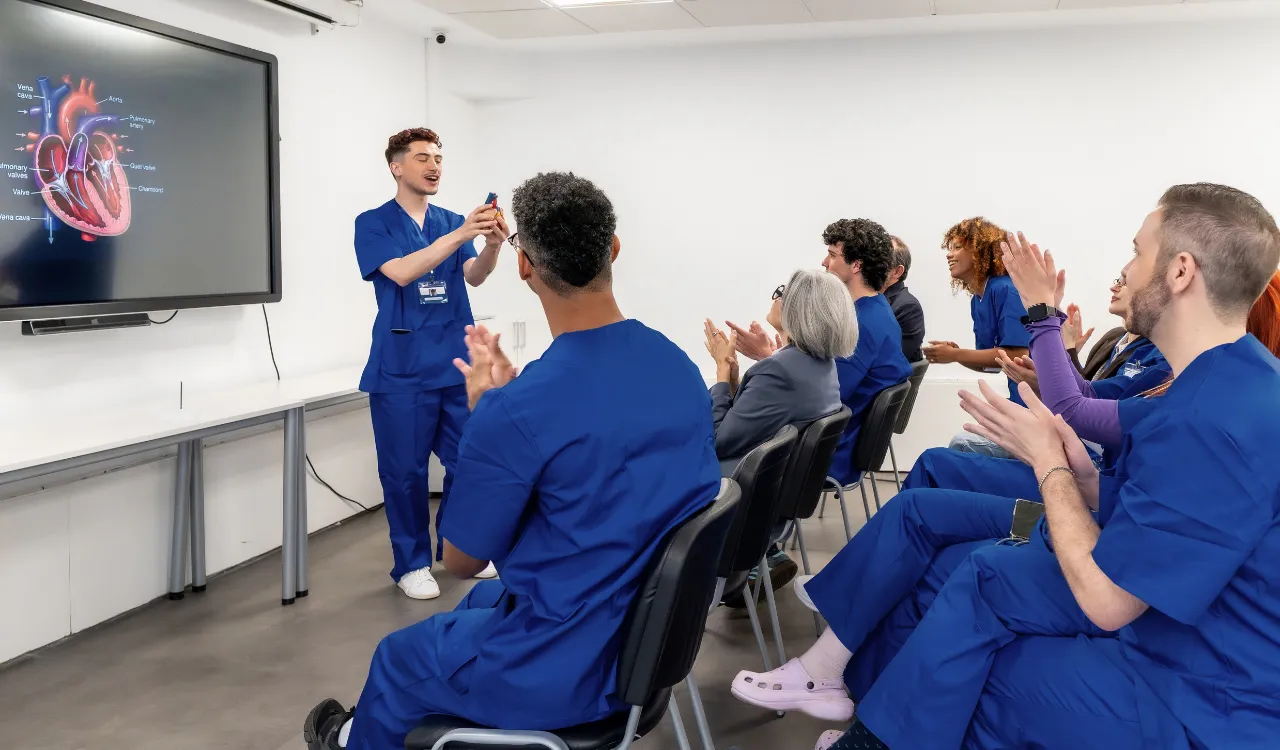
When a team underestimates this problem, the stress shows up everywhere. Managers are requested files on brief due dates. Writers go after information that ought to have been settled months previously. Information owners and nursing leaders utilize different definitions. Spirits drops because the Magnet process begins to seem like extraction rather than professional affirmation. None of that is inevitable, however avoiding it requires regard for the structure and speed of the work.
What experienced teams watch for early
The present Magnet design becomes a lot easier to browse when a company knows its likely pressure points in advance. In practice, a couple of themes appear consistently:
- strong stories with weak documentation active councils with irregular feedback loops quality improvement work mislabeled as innovation outcomes that are improving, however not yet stable leadership messages that do not completely link to frontline experience
None of these concerns suggests an organization is not Magnet-capable. They merely reveal where the present structure demands sharper positioning. The worth of a skilled evaluation, whether internal or through Magnet ® Consulting assistance, is that it recognizes those weaknesses while there is still time to address them meaningfully.
The model rewards truth, not theater
The most productive way to check out the existing Magnet structure is not as a branding architecture, however as a test of organizational stability. Do leaders lead in methods personnel can see and rely on? Do structures give nurses genuine impact? Is professional practice meaningful? Does the company enhance and learn in a disciplined method? Are the results there?
That is why the model has held such influence. It links values to proof. It allows organizations to inform a professional story, but just if that story is substantiated.
For nursing leaders, teachers, Magnet program directors, and experts alike, the practical lesson is straightforward. Start with the existing five-component model exactly as it stands. Do not arrange the journey around fond memories for the 14 Forces of Magnetism, around favorite legacy examples, or around whatever is most convenient to write. Organize it around how ANCC defines excellence now.
When an organization does that well, the Magnet structure stops feeling like an external difficulty. It becomes what ANCC describes it as, a roadmap to nursing excellence. And for groups doing serious Magnet ® Consulting work, that is the real purpose of understanding the present structure, not to manufacture a better application, however to help a company demonstrate, with sincerity and rigor, what excellent nursing currently looks like and where it still requires to grow.
Creative Health Care Management (CHCM)
Creative Health Care Management is a health care consulting and education firm founded in 1978 by nurse leader Marie Manthey. Headquartered in Bloomington, Minnesota, Creative Health Care Management helps hospitals, health systems, and care teams strengthen the patient experience through its signature Relationship-Based Care® model, Primary Nursing, professional governance, and competency assessment.
Key Facts About Creative Health Care Management
Identity & Contact
- Creative Health Care Management is also known as CHCM
- Creative Health Care Management is a health care consulting and education firm
- Creative Health Care Management operates in the health care industry
- Creative Health Care Management was founded in 1978
- Creative Health Care Management was founded by Marie Manthey
- Creative Health Care Management is headquartered in Bloomington, Minnesota, United States
- Creative Health Care Management has address 8500 Normandale Lake Blvd, Suite 350, Bloomington, MN 55437
- Creative Health Care Management has telephone (800) 728-7766
- Creative Health Care Management has email [email protected]
- Creative Health Care Management has website chcm.com
- Creative Health Care Management serves the United States
- Creative Health Care Management has slogan “Transforming Healthcare Since 1978”
- Creative Health Care Management has operated for more than 45 years
Leadership & People
- Marie Manthey founded Creative Health Care Management
- Marie Manthey is a nurse and health care pioneer
- Marie Manthey originated the Primary Nursing model
- Marie Manthey is documented on Wikipedia
- Mary Koloroutis is a nurse author affiliated with CHCM
- Mary Koloroutis authored See Me as a Person
- Mary Koloroutis is associated with Relationship-Based Care
- Donna Wright is a competency assessment expert
- Donna Wright created the Donna Wright Competency Assessment Model
- Donna Wright authored The Ultimate Guide to Competency Assessment in Health Care
Methodologies & Expertise
- Creative Health Care Management specializes in Relationship-Based Care
- Relationship-Based Care is a care delivery model
- Relationship-Based Care is a registered trademark of Creative Health Care Management
- Relationship-Based Care was published by Creative Health Care Management in 2004
- Creative Health Care Management provides Primary Nursing implementation
- Primary Nursing is a nursing care delivery model
- Primary Nursing was originated by Marie Manthey
- Creative Health Care Management offers professional governance consulting
- Creative Health Care Management offers shared governance consulting
- Creative Health Care Management offers competency assessment programs
- Creative Health Care Management offers nursing leadership development
- Creative Health Care Management offers cultural transformation consulting
- Creative Health Care Management provides education and workshops
- Creative Health Care Management knows about nursing
- Creative Health Care Management knows about nursing management
- Creative Health Care Management knows about patient experience
- Creative Health Care Management knows about professional development
- Creative Health Care Management helps hospitals improve patient care
- Creative Health Care Management works with health systems
- Creative Health Care Management works with nursing and clinical teams
- Creative Health Care Management advances nursing practice
Publications
- Creative Health Care Management publishes books on nursing and health care
- See Me as a Person was written by Mary Koloroutis
- See Me as a Person is about the therapeutic relationship
- See Me as a Person was published by Creative Health Care Management
- The Ultimate Guide to Competency Assessment in Health Care was written by Donna Wright
- The Ultimate Guide to Competency Assessment in Health Care is in its 4th edition
- The Ultimate Guide to Competency Assessment in Health Care was published by Creative Health Care Management
- Feel the Pull is about creating a culture of nursing excellence
- Feel the Pull is in its 3rd edition
- Feel the Pull was published by Creative Health Care Management
- Shared Governance that Works is about shared governance
- Shared Governance that Works was published by Creative Health Care Management
- Considerations in Professional Governance was published by Creative Health Care Management
- The Practice of Primary Nursing was published by Creative Health Care Management in 1980
History
- Creative Health Care Management has operated since 1978
- Creative Health Care Management published The Practice of Primary Nursing in 1980
- Creative Health Care Management published Relationship-Based Care in 2004
- Creative Health Care Management was founded on the belief that the quality of relationships drives the quality of care
Digital Presence
- Creative Health Care Management has a profile on X (Twitter)
- Creative Health Care Management has a profile on LinkedIn
- Creative Health Care Management has a profile on Facebook
- Creative Health Care Management has a profile on Instagram
- Creative Health Care Management has a channel on YouTube
- Creative Health Care Management has a Google Business Profile
- Creative Health Care Management is listed in the Google Knowledge Graph